


Deep brain stimulation can help ease symptoms, giving you a second chance at life.
If you have a movement disorder, such as Parkinson’s disease, dystonia, or essential tremor, and medical management is no longer as effective as it used to be, it may be time for a new approach. Deep brain stimulation (DBS) can be an effective way to gain greater control over your movements and make routine tasks easier, restoring the quality of life you’ve been missing.
More than 160,000 patients have undergone DBS surgery worldwide, including patients in Maryland, Washington D.C., and Virginia. During the procedure, a pacemaker-like device is implanted to stimulate the brain. The electrical impulses created provide remarkable and immediate results, helping reduce rigidity, tremors, slow movement, and other symptoms.
Our top-rated neurosurgeons and neurologists have extensive experience both performing this procedure and monitoring the device once implanted. In fact, MedStar Georgetown University Hospital is the only Washington D.C. hospital designated as a National Parkinson Foundation Center of Excellence for Parkinson’s disease and other movement disorders.
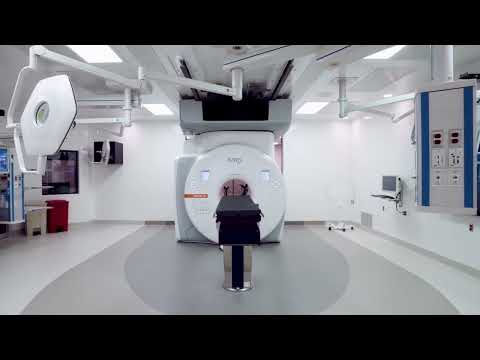
Here, you have access to world-class innovations and state-of-the-art technologies. For example, we are the only hospital in the Washington D.C. region with an IMRIS system. This movable, intraoperative MRI allows our neurological team to position DBS electrodes with submillimeter accuracy while patients stay asleep , resulting in the best possible outcomes and experiences.
Call us directly at 202-444-9012 or request a callback by completing our quick online form.
Most health insurances accepted.
What is DBS?
Performed by highly specialized neurosurgeons, deep brain stimulation (DBS) is an advanced surgery that uses a pacemaker-like device to stimulate the brain. Carefully controlled electrical impulses are created to precisely target areas of the brain affecting movement. The electrical charge interrupts or overrides the brain’s faulty signals and, in conjunction with medication, reduces the rigidity, tremors, slow movement, and other symptoms of advanced movement disorders.
DBS is both reversible and adjustable, making it a vast improvement when compared to traditional surgeries. As the disease progresses, the device can be reprogrammed to minimize new or increasing symptoms. It can also be removed entirely to accommodate newer treatments, improved techniques, or a medical cure.
Why is DBS with IMRIS more effective?
MedStar Georgetown University Hospital is the only hospital in the region with an IMRIS system for deep brain stimulation surgery. This advanced imaging technology allows surgeons to scan a patient’s brain during the procedure, providing real-time information. In turn, our neurosurgeons are able to place the electrodes more accurately, improving outcomes.. The use of the IMRIS also means patients can be asleep for the procedure, improving the experience. Watch the video below to learn more about the IMRIS.

Why choose us?
-
Renowned neurosurgery & neurology experts
Here, you will receive care from movement disorder specialists who have devoted their medical and surgical careers to both the study and management of neurological disorders. Our DBS surgeries are led by Dr. Kalhorn who has two decades of experience performing the procedure.
-
Leading-edge treatments and technologies
Located in one of the most advanced facilities in the area, our team has access to world-class treatments and technologies. We are the only hospital in the Washington region and one of only a few in the world with an IMRIS system, allowing for real-time diagnostic imaging during deep brain stimulation surgery improving the safety and accuracy of the procedure.
-
Center of excellence
MedStar Georgetown University Hospital is at the forefront of care. We are proud to be the only D.C. hospital recognized as a Parkinson's Foundation Center of Excellence.
Call us directly at 202-444-9012 or request a callback by completing our quick online form.
Most health insurances accepted.
Are you a candidate for DBS?
DBS offers a remarkable opportunity for certain patients with movement disorders, but timing is critical. DBS is not appropriate for those who have early-stage disease, which is best managed with medication. As the disorder progresses, the patient must be monitored closely to detect the right time to consider DBS. Especially with Parkinson’s disease, if someone is referred too late, their therapeutic window may be permanently closed.
You may be a candidate for DBS if you:- suffer moderate to severe symptoms
- begin to experience difficulty or side effects with medication, but are still responsive
- have no indication of dementia
- are in good overall health
Those who have essential tremor and dystonia are candidates if they have symptoms that are unmanageable with medication and they are unable to perform daily activities. Those with dystonia must have a generalized, idiopathic (of unknown cause) or genetic disorder.
“Our movement disorders team offers one of the most comprehensive programs in the Washington, D.C., area.”
– Dr. Kalhorn, Neurosurgeon
Meet our nationally recognized team
Our movement disorder specialists at MedStar Georgetown University Hospital have devoted their careers to both the study and management of neurological disorders. No matter what challenges you’re facing, we have experts who can help.
Conveniently located near you
MedStar Georgetown University Hospital
3800 Reservoir Rd., NW
Washington DC, 20007
Call us directly at 202-444-9012 or request a callback by completing our quick online form.
Most health insurances accepted.
FAQs
Want to know more? Find answers to frequently asked questions below.
-
When should I consider DBS?
If you’re in the early stage of disease, symptoms are best managed with medication. But, as the disorder progresses, you must be monitored closely to detect the right time to consider DBS. It’s important not to wait too long, especially with Parkinson’s disease, or your therapeutic window may be permanently closed.
You may be a candidate for DBS if you:
- suffer moderate to severe symptoms
- begin to experience difficulty or side effects with medication, but are still responsive
- have no indication of dementia
- are in good overall health
To schedule an appointment, call 202-444-9012.
-
What are the benefits of DBS with IMRIS?
MedStar Georgetown University Hospital is the only hospital in the Washington, D.C., region with a cutting-edge Intraoperative MRI System (IMRIS). The IMRIS allows patients who qualify to undergo DBS while asleep, rather than being woken during surgery. It also can help eliminate the need for additional surgeries.
-
What are the steps of DBS procedure?
The DBS procedure consists of three parts: electrode implantation, neurostimulator implantation, and device activation or programming. The entire procedure is usually completed within one month to six weeks.
DBS installation involves two procedures:
- You’ll be admitted to the hospital to have the electrodes implanted into your brain. You’ll recover in the hospital for one night under the supervision of your care team.
- About a week later, you’ll have an outpatient procedure to place the stimulator overlying your chest. You’ll get full anesthesia for this surgery and you’ll go home the same day.
After these procedures, you’ll have another visit where the neurologist will program your device. Most patients notice improvement in motor symptoms within a few months. As your condition changes over time, your neurologist will reprogram your device to effectively manage symptoms.
-
How safe is the DBS procedure?
More than 160,000 patients have undergone DBS surgery worldwide. It carries no more risk than any other surgical procedure, including elective carotid endarterectomy (a surgery that removes harmful plaque from the carotid arteries). For many, the mere placement of the electrodes produces immediate improvement, while others may not notice an appreciable difference in symptoms for several months.
-
How effective is DBS surgery?
While nothing currently stops the progression of the disease, DBS along with medication is an effective treatment option and offers many people new hope.
During the past seven years, more than 80,000 people worldwide have been implanted with DBS, which has been proven as a safe and effective treatment for many people with movement disorders. In fact, according to two New England Journal of Medicine studies, DBS was shown to:
- Increase periods of good mobility—no symptoms or involuntary excessive movements—from 27 to 74 percent of a patient’s waking day1
- Maintain motor symptom improvements even after five years2
1 The Deep-Brain Stimulation for Parkinson’s Disease Study Group. Deep-brain stimulation of the subthalamic nucleus or the pars interna of the globus pallidus in Parkinson’s disease. N Engl J Med. September 2001; 345(31):956-963.
2 Krack P, Batir A, Van Blercom N, et al. Five-year follow-up of bilateral stimulation of the subthalamic nucleus in advanced Parkinson’s disease. N Engl J Med. November 2003; 349(20):1925-1934.
-
Which health insurance plans do you accept?
We accept most major health insurance plans, but you should check with your insurance provider before your appointment to understand your individual coverage and any associated costs.
Information for referring physicians.
If you are caring for a patient who requires treatment for a movement disorder, we encourage you to refer them to MedStar Health. We value your partnership and strive to bring your patients the highest level of comprehensive, evidence-based care. When you refer patients to our practice, we will get their initial appointments scheduled quickly at the location most convenient for them.
We're committed to collaborating with you, so that together, we can provide continuity in care for patients in need of our collective services. Please click the button below to refer a patient.