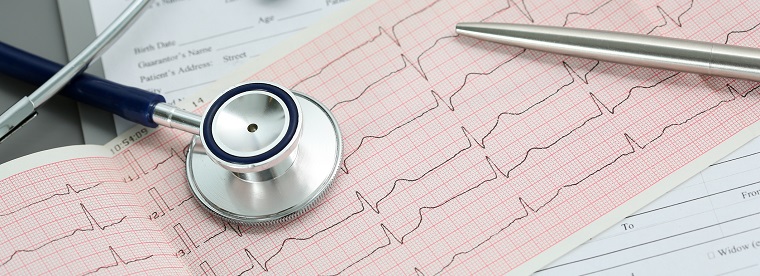
If a patient comes into the emergency department while the palpitations are going on, we may be able to provide medications to slow the heart rate or convert an abnormal heart rhythm to a normal one. In extreme cases where medications aren’t enough, we may need to do a cardioversion. That’s when we shock the heart so it can reset itself to a normal rhythm. Patients are sedated during this procedure so they do not feel the electrical shock.
Further testing for heart palpitations
In most cases, we see patients in the emergency department whose palpitations have either gone away or aren’t critical by the time they arrive. Like a car problem that clears up when you visit the mechanic, this can be frustrating for patients.
We reassure them that just because we don’t see an abnormal heart rhythm now doesn’t mean that they didn’t have one before. We check for any signs of damage or injury, and we may monitor patients for a few hours at the emergency department to see if they have another episode of palpitions, but there may not be enough time to capture an abnormal heart rhythm that comes and goes.
We often refer patients who have had heart palpitations to a cardiologist in the MedStar Heart & Vascular Institute. For example, we might diagnose an abnormal heart rhythm in the emergency department, but it’s not something that needs emergency treatment. Or we might not see evidence of an abnormal heart rhythm, but we think the patient could benefit from additional monitoring to rule out possible heart problems.
A cardiologist can provide patients with special monitoring equipment to examine the heart’s rhythm. There are two main types of monitoring equipment. A Holter monitor will record the heart’s rhythm continuously for a defined time limit (often 24-48 hours), while an event recorder will only record briefly when a patient has symptoms of palpitations and presses a record button. If this testing shows evidence of a heart condition, our cardiologists work with patients to create an effective treatment plan.
A normal heartbeat is easy to take for granted. So when we feel heart palpitations, it can be very scary. But with quick medical attention and advanced monitoring, your heart can beat steadily for a long time to come.