


Caring for children, adolescents and young adults with cancer and blood disorders
Discover convenient, state-of-the-art care for children and young adults with cancer or hematologic disorders at our multidisciplinary treatment program.
We take a progressive approach to care, paying attention to the developmentally appropriate ways of working with patients across an age spectrum from birth through young adulthood. With comprehensive support to meet emotional as well as clinical needs, our program stands out in the region with integrative medicine services, like yoga, acupuncture, and nutraceutical evaluation.
We support families, caring for our very youngest patients in infancy and early childhood. As patients transition to adolescence, we empower them with resources to make informed health choices through our Adolescent and Young Adult program, including genetic counseling. When other centers stop admitting new patients at 18 years old, we welcome all young adults who can benefit from our services up to age 39.
We’re here for you and your family, whether you are facing a new cancer or hematologic diagnosis, coping with complications of therapy, or transitioning to life following cancer.
- Nationally and internationally renowned pediatric cancer specialists, focused on childhood and adolescent cancers including sarcoma, rare cancers, and leukemia
- Nationally recognized experts in the diagnosis and treatment of blood disorders and bleeding disorders, including hemophilia and sickle cell anemia
- Our embedded Integrative Medicine program enhances patient well-being and reduces the side effects of therapy
- Adolescent and Young Adult Cancer program (ages 15 to 39)—the first of its kind in our region—meeting the specific needs of this patient set
- Long-Term Survivor program that follows cancer patients who are five years past the completion of therapy, including a comprehensive evaluation of physical health, academic and social development, coping skills, and even addresses financial and insurance concerns
- Access to clinical trials as part of the Georgetown Lombardi Comprehensive Cancer Center, the Washington, D.C., region’s only National Cancer Institute (NCI)-designated comprehensive cancer center
- Connections to a nationwide community of cancer researchers and advocates as a member of the Children’s Oncology Group
- Nutraceutical and dietary supplement evaluation offered as part of our integrative medicine service to evaluate the safety and validity of vitamins, dietary supplements, and other nutraceuticals on behalf of our patients
Specialties and programs
Leukemia and Lymphoma Program
Our Leukemia and Lymphoma program offers various treatment options for every type and phase of acute lymphoblastic leukemia, acute myeloid leukemia, and chronic myeloid leukemia. Treatment options include chemotherapy, as well as targeted small molecule therapy, novel cellular therapies, radiation therapy, bone marrow transplantation, and immunotherapy.
Solid Tumor, Sarcoma, and Brain Tumor Program
Solid tumors account for a third of all childhood cancers and represent a wide range of malignancies. A subset of solid tumors that occur in bone, muscle, and soft tissue are called sarcomas. Our program features a strong, multidisciplinary team of experts who address the complex and varied needs of patients with these types of diagnoses.
Blood Disorders Program
Patients with blood disorders, including hemophagocytosis (HLH), hemophilia, clotting disorders, and other disorders of red cells, white cells, and platelets (including ITP), receive exceptional, highly collaborative care from clinical experts in their disease states. Applying the latest advancements in treatment and research, our patients receive the most advanced care available. Our Hemophilia Treatment Center is a federal-designated center that serves patients of all ages.
Sickle Cell Program
Patients with sickle cell disease often face a lifetime of hospital visits. Here, they receive advanced, multidisciplinary treatment and compassionate care from a personal team of experts with whom they build strong and supportive relationships.
Surgical Oncology Program
Our surgical oncologists are fellowship-trained and skilled at working within a multidisciplinary team of expert specialists. Together, they develop a treatment plan that will be most effective for each patient and based on the latest research and use of state-of-the-art surgical procedures.
Radiation Oncology Program Our integrative treatment approach takes great care in maximizing radiation effects on tumors, while carefully working to minimize radiation to the rest of the body. We are the only program in the Washington, D.C., area to offer access to all of the latest cutting-edge treatment options for pediatric patients, including conventional radiation therapy, CyberKnife ®, ZAP-X ®, and proton therapy.
Long-Term Survivor Program
Our Long-Term Survivor Program follows cancer patients who have completed therapy. Care includes a comprehensive evaluation of the patient’s physical health, academic and social development, coping skills, and even addresses financial and insurance concerns. Our team also provides basic patient education about diagnosis, treatment, and potential risks for late-effects from treatment. We have found integrative therapies very helpful for cancer survivors.
Adolescent and Young Adult Cancer Program
Our Adolescent and Young Adult Cancer program fosters a gradual shift of responsibility for a young person’s health from parents to self. The program provides access to clinical trials and clinical trial education, as well as integrative medicine services, allowing patients to discuss the risk and benefits of alternative and complementary approaches to their care. Initial evaluations include considerations for all current and future life stages for all patients. We make it easy for patients to access other specialized services including physical therapists, occupational therapists, nutritionists, genetic counselors, and palliative care specialists. To further assure their well-being, we assess psychosocial needs often throughout the patient journey.
Integrative Medicine Programs
Successful outcomes rest on more than just medical treatment. Our program offers a range of integrative medicine and supportive services, from major components to little but appreciated touches, so we may use less medication to treat the side effects of cancer, blood disorders, or clotting disorders. These services include:
- Nutritional guidance
- Mind-body medicine, including relaxation, meditation, guided imagery, biofeedback, and physical exercise, among other practices
- Yoga, massage, and acupuncture
- Nutraceutical and dietary supplement evaluation
Psychosocial Programs
Providing social and emotional resources is central to meeting all of our patients where their needs lie. Through our program, patients and their families have access to a variety of specialists providing multidisciplinary care to address these critical areas.
- Child Life program: Our certified child life specialists and organizations like Hope for Henry provide therapeutic play and recreational activities to support children and families as they cope with illness, hospitalization, and treatment.
- Social work: An integral part of the health care team, our licensed clinical social workers help patients and their families cope with the emotional, mental, and social challenges resulting from their diagnosis.
- Back to school (or work) transition services: Team members are available to visit the classroom and work with the parents and school in advocating for IEPs and 504 educational plans, as needed by the child. Similarly, as a young adult returns to the workforce, our team is ready to support their transition in any way needed.
- Art therapy: The Georgetown Lombardi Arts and Humanities Program (AHP) promotes care for our patients, family members, and the community through its programs of music, expressive writing, dance, and visual arts—including the nationally recognized Tracy’s Kids Art Therapy.
- Child psychology and neuropsychology: Our psycho-oncology program provides inpatient and outpatient psychological and psychiatric treatments and consultations to help address mental well-being.
- Physical, occupational, and speech therapies: Rehabilitation helps our patients with challenges such as pain, fatigue, difficulty speaking or swallowing, or other quality-of-life issues. We help patients access these services through the MedStar National Rehabilitation Network.
Conditions and treatments
All cancer types, including:
Hematologic disorders:
Treatments:
-
General tips
Supporting your own well-being can help you better support your child during their hospital experience.
- A calm approach and clear, honest communication can help support your child’s understanding and comfort.
- Pack snacks for yourself, chargers for electronic devices, medications and toiletries, and things to occupy your time.
- Pack familiar and favorite items to help your child feel safe and comfortable.
- Maintain routines as much as possible while you’re in the hospital.
-
Preparing my child for a hospital stay
Preparing your 2 to 3 year-old
- Use Simple Words. Explain, “You are going to have a sleepover at the hospital.”
- Support. Reassure your child that they haven’t done anything wrong.
- Comfort. Pack familiar items to make the hospital feel safe and comfortable.
- Prepare yourself. Toddlers may cry or get frustrated. Comfort them, acknowledge their feelings, and set limits.
Preparing your 4 to 9 year-old
- Explain. “The doctor will help you feel better.” Answer your child’s questions honestly.
- Express feelings. Encourage hospital play, such as pretending to be a doctor, to allow your child to express their feelings and fears.
- Comfort. Bring items and activities that will provide a sense of normalcy and comfort.
Preparing your 10+ year-old
- Encourage questions. Let your teen speak with the healthcare team if they have questions or want more information.
- Promote independence. Teens may struggle with a mix of independence and dependence. Respect their need for space while offering support.
- Connection. Don’t forget to pack devices! Encourage your child to stay in touch with friends.
- Be patient. Prepare for the possibility of some emotional changes. Address these changes with patience and understanding.
Helping your child through common medical procedures
This guide helps parents support their child through common medical procedures such as IV placements, PICC lines, port access, central line care, and lumbar punctures. It provides age-appropriate preparation tips, step-by-step explanations, and comfort strategies to reduce anxiety and help children feel safe, informed, and supported before, during, and after each procedure.
-
Port access
A port is a small device placed under your skin that is used to remove a little blood and help your body get medicine. When it’s time to get your port accessed, your nurse will place a needle into your port and connect it to an IV pole.
Preparing your child for their port access can help reduce anxiety. This guide will explain what to expect and provide tips for supporting your child during their port access.
Before the procedure
You know better than anyone how and when to set your child up for success! We’ve provided some guidance around when it is best to discuss your upcoming appointment.
- 2 to 3 years old: Tell your child immediately before the visit. “Your doctor is going to access your port to give you medicine. While this happens, do you want to read a book or watch a show?”
- 4 to 9 years old: Start the conversation a day or two before the visit. “The nurse is going to access your port. You may feel a pinch and pressure. While this happens, do you want to take deep breaths, or listen to a relaxing story?”
- 10+ years old: Talk with your child days before getting their port accessed. “The nurse is going to access your port using a small needle. You may feel a quick pinch and pressure. What do you want to bring to the appointment? Do you have any questions?”
Explain the port access in three easy steps
- Show your nurse your port and put on your mask. Your nurse cleans your skin and waits for it to dry.
- Hold still while your nurse accesses your port. Your nurse will flush your port and cover it with a dressing.
- Your nurse will draw your blood then connect your line to your IV pole.
Ask about comfort options
Talk to your medical team about the best plan of care for your child. A few options are numbing cream, numbing spray, or an ice pack.
During the procedure
Kids benefit from having choices. Here are some of our favorite ways to help kids during their port access:
- Sit next to you or sit on your lap
- Watch or look away
- Hold your hand or squeeze a stuffed animal
- Look at a picture book or listen to a song
- Take deep breaths or count to 10
Create a safe and comforting experience
Your presence provides comfort to your child. Talk to the medical team about how you can work together to create a positive experience.
Be calm and supportive
- Children often look to their caregivers during times of stress.
- Be truthful about the sensations they may experience: “You may feel a pinch and pressure.”
- Crying is a normal reaction. Try redirecting your child’s attention: “It’s ok to cry. Let’s take a deep breath together.”
- Reassure your child: “I know you’re scared. I’m here and you’re safe.”
After the procedure
Acknowledge your child’s bravery and discuss one specific behavior they demonstrated well. Ask your child how they feel the procedure went
-
Central line dressing change
A central line is a long, thin tube that carries medicine, fluids, and nutrients to your body. It is important to keep this tube clean and dry by changing the bandage or “dressing” that covers the line.
In this guide, you’ll find helpful information about your child’s central line dressing change. It covers what to expect, how to prepare, and tips for supporting your child.
Before the procedure
You know better than anyone how and when to set your child up for success! We’ve provided some guidance around when it is best to discuss your upcoming appointment along with age-appropriate language.
- 2 to 3 years old: Tell your child immediately before the procedure. “The doctor is going to change your bandage today to keep it clean.”
- 4 to 9 years old: Start the conversation a day or two before the procedure. “The doctor will give you a new, clean bandage. Do you have any questions for me or the doctor?”
- 10+ years old: Days before, speak with your child about their central line dressing change. “It’s almost time for your dressing change. Is there anything you want to do to prepare?”
Explain the central line dressing change in three easy steps
- Your nurse uses adhesive remover and carefully removes your dressing.
- Your nurse cleans your skin and waits for it to dry.
- Your nurse covers your line with a new dressing.
Bring the essentials
- Comfortable, loose-fitting shirt with easy access to your child’s arm or chest.
- Activities to distract your child.
- Favorite comfort item (e.g., stuffed animal or blanket).
During the procedure
Kids benefit from having choices. Here are some of our favorite ways to help kids during their central line dressing change:
- Sit next to you or sit on your lap
- Listen to music or read a book
- Watch a movie or TV show
- Take deep breaths or squeeze a stuffed animal
Be calm and supportive
- Children often look to their caregivers during times of stress.
- Be truthful about the sensations they may experience: “Your bandage is very sticky but the nurse will use a special solution to make it easier to remove.”
- Crying is a normal reaction. Redirect your child’s attention: “Do you want to watch your favorite tv show? Do you want to squeeze my hand? Let’s take a deep breath together.”
After the procedure
Acknowledge your child’s bravery and discuss one specific behavior they demonstrated well. Ask your child how they feel the procedure went
-
IV placement
An IV is a small, soft tube placed inside a vein in your hand or arm. It can also be called an “intravenous line.” An IV will help your body get medicine and fluids.
Preparing your child ahead of time for their IV placement can reduce anxiety and help them feel more at ease. We’ll share what to expect, tips for best supporting your child, and how to make the experience as comfortable as possible.
Before the procedure
You know better than anyone how and when to set your child up for success! We’ve provided some guidance around when it is best to discuss your upcoming appointment.
- 2 to 3 years old: Tell your child immediately before the visit. “Your nurse is going to put a small tube in your arm or hand today. While this is happening, do you want to read a book or watch a show?”
- 4 to 9 years old: Start the conversation a day or two before the visit. “Your nurse is going to place a small tube inside a vein in your arm or hand. You may feel a quick pinch. During your IV placement, do you want to watch or look away?”
- 10+ years old: Days before, talk to your child about getting an IV. “Your nurse is going to place an IV, or a small tube, inside a vein in your hand or arm. You may feel a quick pinch. What do you want to bring to the appointment? Do you have any questions?”
Explain an IV placement in three easy steps
- Your nurse places a needle in your arm. It may feel like a poke.
- The nurse gently takes the needle out. A little straw remains in your vein.
- Hold still while your nurse flushes your IV with water and covers it with a bandage.
Ask about comfort options
Talk to your medical team about the best plan of care for your child. A few options include numbing cream, numbing spray, a numbing patch, or an ice pack.
During the procedure
Kids benefit from having choices. Here are some of our favorite ways to help kids during their IV placement:
- Sit next to you or sit on your lap
- Watch or look away
- Hold your hand or squeeze a stuffed animal
- Take deep breaths or count down from 100
Create a safe and comforting experience
Your presence provides comfort to your child. Talk to the medical team about how you can work together to create a positive experience.
Be calm and supportive
- Children often look to their caregivers during times of stress.
- Be truthful about the sensations they may experience: “You will feel a poke and pressure.”
- Crying is a normal reaction. Try redirecting your child’s attention: “It’s ok to cry. Let’s take a deep breath together.”
- Help your child get accustomed to the IV: “While the IV is in your body, you can still do the things you like such as drawing, reading, or playing games.”
After the procedure
Acknowledge your child’s bravery and discuss one specific behavior they demonstrated well. Ask your child how they feel the procedure went
-
Lumbar puncture
A lumbar puncture, also known as a spinal tap, is a procedure where a small amount of fluid is taken from around the spine. Preparing your child ahead of time can help reduce anxiety. This guide will explain what to expect, provide tips for keeping your child comfortable, and offer ways to make the experience as stress-free as possible.
Before the procedure
You know better than anyone how and when to set your child up for success! We’ve provided some guidance around when it is best to discuss an upcoming procedure.
2 to 3 years old
Tell your child immediately before the visit.
“Your doctor is going to touch your lower back and you’ll feel a poke and pressure. While this happens it’s important to stay still. Would you like to watch a movie?”
4 to 9 years old
Start the conversation a day or two before the visit.
“The doctor is going to insert a small needle into your lower back to collect fluid. You may feel a pinch and some pressure. Do you want to watch a movie or listen to a story that helps you relax?”
10+ years old
Days before, talk to your child getting a lumbar puncture.
“The doctor is going to insert a small needle into your lower back to collect some fluid. You may feel a pinch and some pressure. Do you want to download a new TV series or guided meditation?”
Explain a lumbar puncture in three easy steps
- Lie down on your side and curl up into a ball or sit on the edge of the bed and lean over your knees. Your doctor cleans your back with special soap.
- Your doctor applies pressure to your back. You may feel a poke and a little sting. Your doctor covers your back with sterile towels.
- Hold still while you feel some pressure in your back. Your doctor will remove the towels and apply a bandage. Once the procedure is finished, lie flat on your back.
Ask about comfort options
Talk to your medical team about the best plan of care for your child. A few options are numbing cream, a numbing patch, or an ice pack.
During the procedure
Kids benefit from having choices. Here are some of the options you can ask about to help your child during their lumbar puncture:
- Hold your hand or squeeze a stuffed animal
- Listen to a song or look at a picture book
- Take deep breaths or listen to a guided meditation
Create a safe and comforting experience
Your presence provides comfort to your child. Talk to the medical team about how you can work together to create a positive experience. Below are some effective comfort and distraction measures to consider:
Medical equipment
It may be helpful to tell your child that only some of the medical equipment they see will be used.
Deep breaths
Encourage your child to take slow, deep breaths. Remind your child that their most important job is to stay still.
Be calm and supportive
- Children often look to their caregivers during times of stress.
- Be truthful about the sensations they may experience: “You might feel a lot of pressure.”
- Crying is a normal reaction. Try redirecting your child’s attention: “It’s ok to cry. Let’s take a deep breath together.”
After the procedure
Acknowledge your child’s bravery and discuss one specific behavior they demonstrated well. Ask your child how they feel the procedure went.
-
PICC line placement
A PICC line is a thin, long tube placed inside a vein in your arm. It can also be called a “peripherally inserted central catheter.” A PICC line can stay in your arm longer than an IV, which means less needle pokes for blood tests. You can also get fluids, medicine, and nutrition through your PICC line.
Before the procedure
You know better than anyone how and when to set your child up for success! We’ve provided some guidance around when it is best to discuss your child’s upcoming procedure.
- 2 to 3 years old: Consider telling your child immediately before the procedure. “Your doctor is going to put a small tube in your arm today. Do you want to read a book or watch a show?”
- 4 to 9 years old: Start the conversation a day or two before the procedure. “You might feel pressure and a poke in your arm when the nurse places the PICC line (a small tube) in your arm. Do you want to take deep breaths, or listen to a guided meditation?”
- 10+ years old: Talk with your child days before they get a PICC line placed. “You might feel pressure and a poke in your arm when they insert the PICC line to deliver medicine and fluids. Would you like to watch TV while your PICC line is being placed? Do you have any questions?”
Explain the PICC line placement in three easy steps
- Your doctor covers your arm and body with sterile towels.
- Feel a poke in your arm that might tingle, then feel some pressure.
- Your doctor covers your new tube with a bandage.
Ask about comfort items
Talk to your medical team about the best plan of care for your child and the comfort options available like numbing medicine. Some children are given sedation (sleep medicine) so that they are not awake during the procedure.
During the Procedure
Kids benefit from having choices. Here are some of our favorite ways to set your child up for success during their PICC line placement.
- Hold a hand
- Listen to a song
- Take deep breaths
- Squeeze a stuffed animal
- Look at a picture book
- Listen to a guided meditation
Taking care of your child’s PICC line
Your presence provides comfort and reassurance to your child after a procedure. Talk to the medical team about how your child can resume daily life after a PICC line placement. Below are a few helpful reminders:
- Comfortable clothing
Your child’s arm may feel sore after the procedure. Consider wearing shirts with loose-fitting sleeves for extra comfort. - Movement & activity
Contact sports and rough playing is discouraged, but your child can resume most activities including going back to school and spending time with friends. - Bathing
The bandage must remain dry at all times, so talk with your medical team about a water-resistant bandage. - Dressing Changes
Depending on how long your child’s PICC line stays in their arm, they may need a new bandage to keep it clean.
Be calm and supportive
Children often look to their caregivers during times of stress.
- Be truthful about the sensations they may experience: “You may feel a quick pinch.”
- Crying is a normal reaction. Try redirecting your child’s attention: “It’s ok to cry. Let’s take a deep breath together.”
- Reassure your child: “I know you’re scared. I’m here and you’re safe.”
After the procedure
Acknowledge your child’s bravery and discuss one specific behavior they demonstrated well. Ask your child how they feel the procedure went
Ask a doctor videos
-
Cancer in Children and Young Adults: Ask Dr. Jeff Toretsky


-
Sickle Cell Disease: Ask Dr. Susmita Sarangi

-
Clotting Disorders: Ask Dr. Gary Kupfer

-
Pediatric, Adolescent, and Young Adult Hematology and Oncology: Ask Dr. Tara Suntum

-
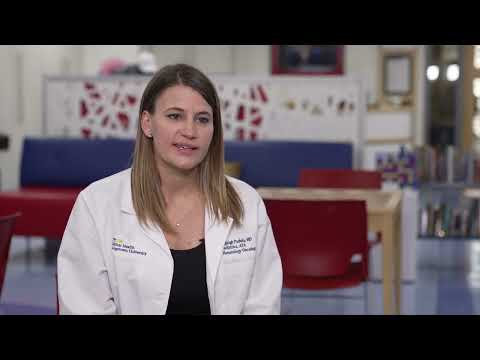
Pediatric, Adolescent, and Young Adult Hematology and Oncology: Ask Dr. Caileigh Pudela
Patient stories
Our providers
Location: Change location Enter your location
-
Caileigh Lauren Pudela, MD
Pediatric Hematology and Oncology & Pediatrics
-
Susmita Nursingha Sarangi, MD
Pediatrics & Pediatric Hematology and Oncology
-
Jennifer L. Toth, MSN NP
Pediatric Hematology and Oncology
 Show All